Slot Mechanics & Strategy.
Everything you need to know about RTP, volatility, hit frequency, and bonus mechanics - without the marketing fluff. Honest education for Ontario players.
What Are Slots, Really?
Underneath the theme, a slot is a random number generator with a nice interface bolted on. Every spin is independent. The reels turning, the symbols landing, the near-misses — that's all feedback, not mechanism. The result was decided the instant you hit spin; the animation just shows it to you.
Worth holding onto, because it kills the two most common slot myths at once: a machine isn't 'due', and it isn't 'hot'. Past spins tell you nothing about the next one. What does shape your experience is the maths the game was built on, and that comes down to a few numbers.
Guides Categories.
Four numbers tell you how a slot will play before you ever spin it.
RTP
The long-run share a slot is built to pay back. Higher is better for you, but it's an average over millions of spins, not a promise for tonight.
Volatility
How the return is spread out, from frequent small wins to rare big ones. It sets how deep a bankroll you need more than RTP does.
Hit Frequency
How often any win lands at all. A low hit rate next to a high cap is the signature of a feature-led, swingy game.
Max Win
The ceiling, as a multiple of your stake. The bigger the ceiling, the more variance usually sits under it.
How RTP Actually Works.
RTP is the number players quote most and understand least. A 96% RTP means that across millions of spins, the game is built to return 96% of everything wagered — which also means it keeps 4%. That 4% is the house edge, and it doesn't switch off because you're having a good night. The figure says nothing about your next hundred spins: a 97% slot can take your balance in a session, and a 94% one can pay big. Where it matters is over time — the gap between 94% and 97% adds up faster than most players expect.
On Ontario operators the published RTP is provider-set and can't be quietly changed on a live game, though some titles ship in more than one RTP build, so it's worth confirming the figure on the specific operator.
Low, Medium, High Volatility.
Volatility is the most useful single number for matching a slot to your bankroll.
Low
Frequent small wins, gentle balance movement. Good for a longer session on a tighter budget; the trade-off is a low ceiling.
Medium
Wins land often enough to keep things moving, with the occasional bigger hit. Where most mainstream titles sit.
High
Long quiet stretches broken by rare, larger payouts, with most of the return locked in the bonus. Needs a deeper bankroll and patience. As a rough guide, a high-volatility slot can run 50 to 200 spins between meaningful wins, so a buffer of around 200x your stake is sensible.
Reels, Paylines, and Features.
Four mechanics define how most modern slots play. These are the ones you'll meet most across Ontario's catalogues.
Megaways
Big Time Gaming's licensed mechanic randomises the symbol count on each reel every spin, sometimes topping 117,000 ways to win. Busy base game, high volatility, with the return concentrated in free spins. Bonanza Megaways is the original.
Hold & Win
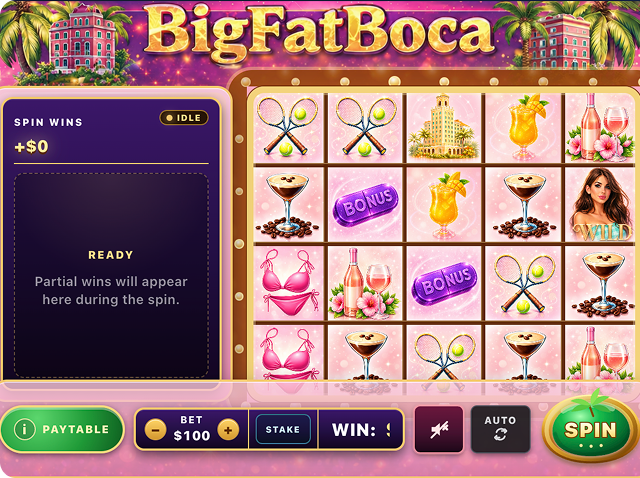
Special symbols land and lock in place across a set of respins, and each new one resets the count. The base game runs quiet; the money's in the collect round. Our own Big Fat Boca uses this format.
Cascading Reels
Winning symbols clear and new ones drop in, so one spin can chain several wins, often with a multiplier climbing through the chain. Sugar Rush is a clean example.
Buy Bonus
On some titles you can pay a fixed multiple of your stake, usually 50x to 100x, to jump straight to the bonus. It skips the wait, not the house edge: the price matches the cost of triggering the feature naturally, so it buys the variance, not better odds.
FAQ
Three Games. Zero Excuses.
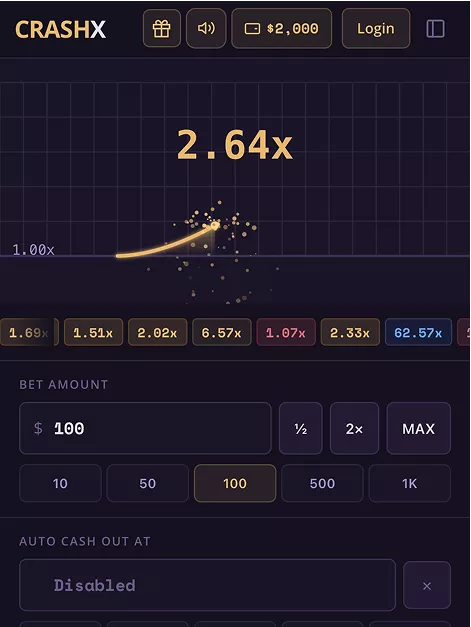
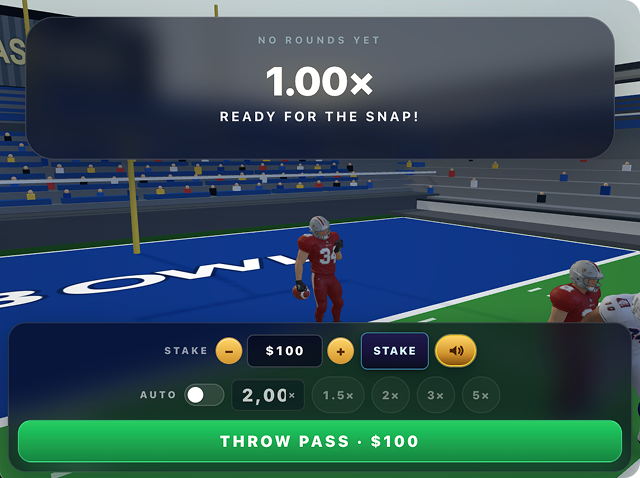
Three games we built ourselves, free on their own subdomains with no signup and no deposit. They're the cheapest way to learn how crash timing and slot features behave before you risk anything real on an operator.